
Simulate anything before you build it.
Ask your agent if a part will crack.
npm i -g wobblwobbl setup
pipx install wobblwobbl setup
uv tool install wobblwobbl setup
npx wobbl setup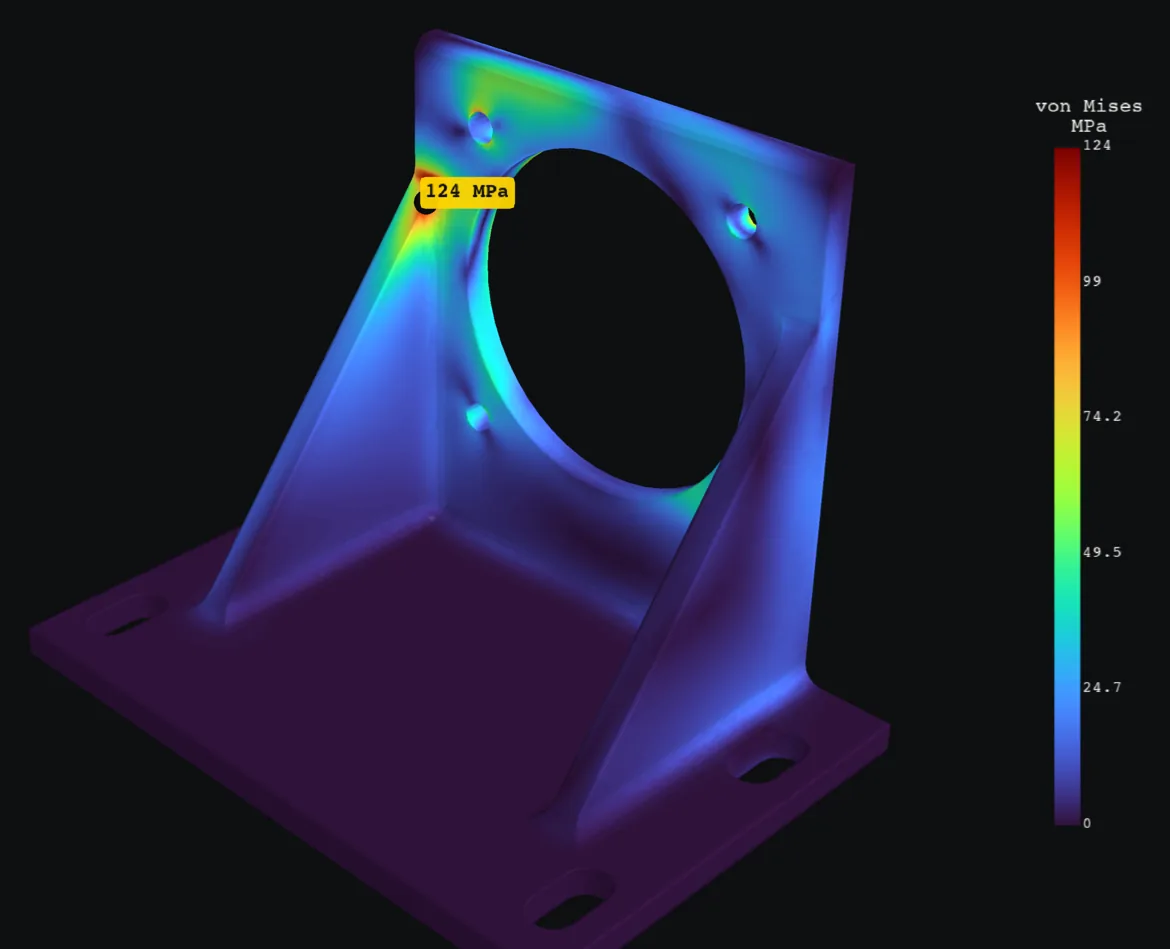
123.7 MPa
Marginal
A dropped rock and a rocket launch
- Time
- 8.72 s
- Altitude
- 0 m
- Speed
- 56.8 m/s
Lands at 56.8 m/s after 8.72 s
Lands at 56.8 m/s after 8.72 s. The run marks release at 0 s, 300 m up, then impact at 8.72 s, 0 m up. The same drop without air lands after 7.82 s.
- Time
- 202.8 s
- Altitude
- 0 m
- Speed
- 7.3 m/s
- Phase
- Landed
Reaches 3,439 m and lands 29.3 m from the pad after 202.8 s
Reaches 3,439 m and lands 29.3 m from the pad after 202.8 s. The run marks liftoff at 0.0014 s, 0 m up, then rail exit at 0.173 s, 2.4 m up, then burnout at 2.65 s, 647 m up, then apogee at 23.5 s, 3,439 m up, then drogue deploy at 23.5 s, 3,439 m up, then main deploy at 178 s, 150 m up, then landing at 203 s, 0 m up.
What a run looks like
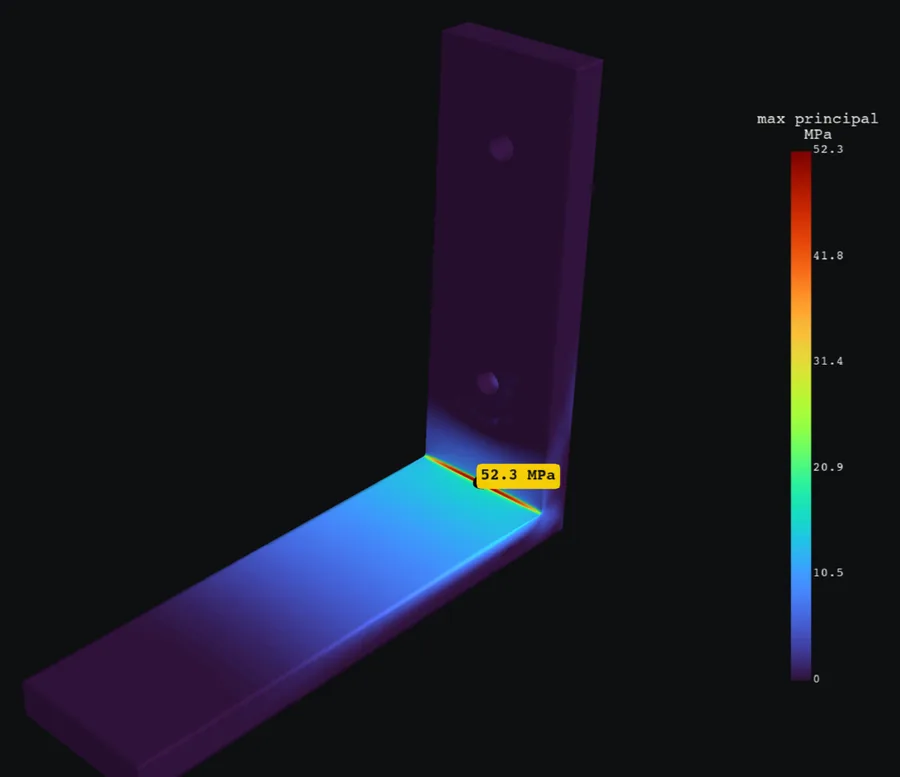
“Will this printed PLA shelf bracket hold its share of an 8 kg shelf?”
The bracket fails at 52.3 MPa and holds at 9.82 MPa with a gusset.
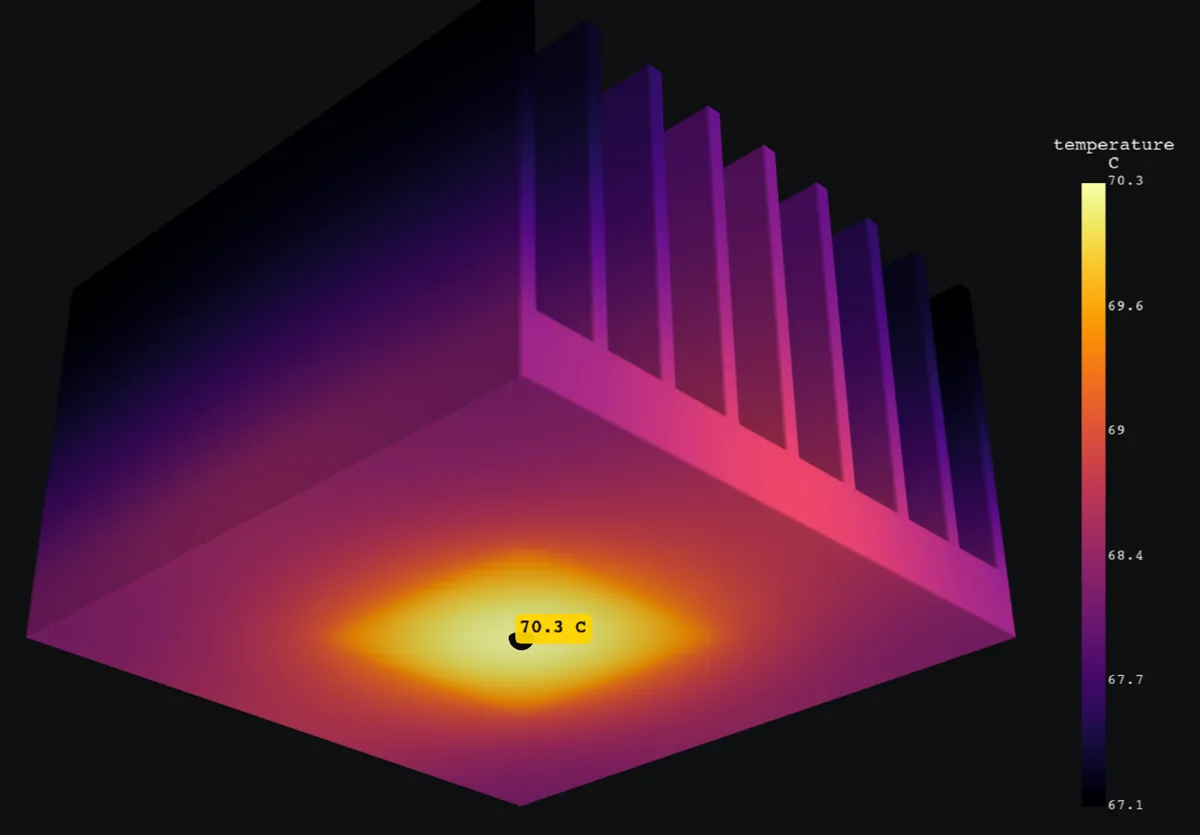
“Will a 15 W chip stay under 85 C on this heat sink without a fan?”
The chip peaks at 70.3 C, under the 85 C limit.
A coding agent alone and with Wobbl
1 of 10 tries answered
6 of 6 parts answered